Loading...
About this place
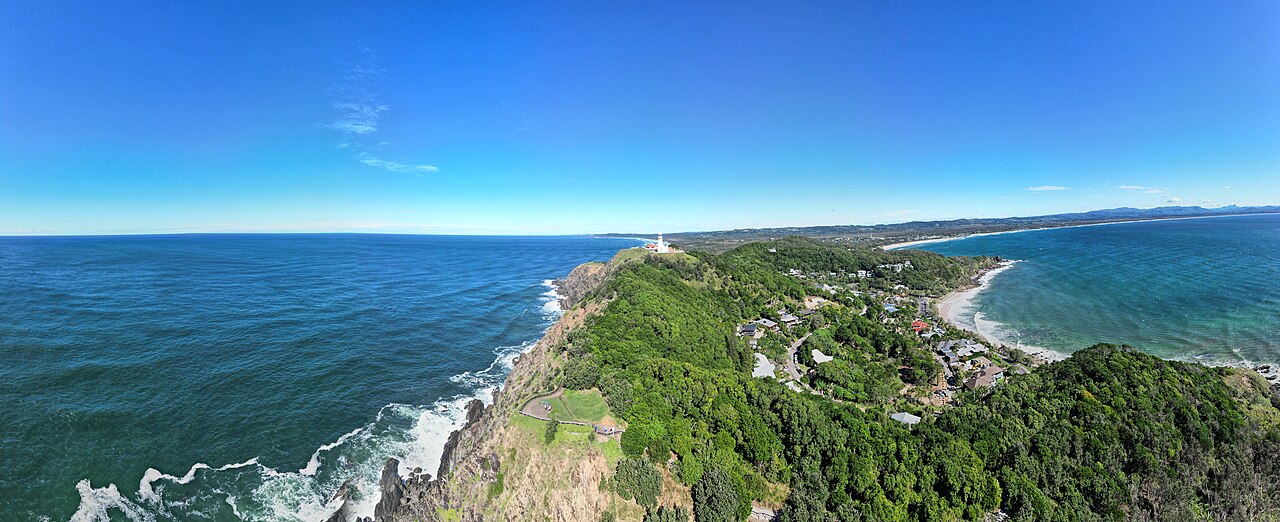
Australia's most famous beach town sits at the easternmost point of the mainland, where the lighthouse looks out across the Pacific. Byron combines surf culture, rainforests, farm-to-table food, and a genuinely relaxed pace of life. Cape Byron walking track takes you past the lighthouse, kangaroos on the headland, and spectacular coastal views. The hinterland has waterfalls, crystal-clear swimming holes, and the famous Crystal Castle.
Highlights
Cape Byron Lighthouse & walking track
Surfing at Main Beach or The Pass
Hinterland waterfalls & swimming holes
Farmers markets & organic food
Attractions
What to see, how long to spend, and roughly what it costs.
Cape Byron Lighthouse walk
2 hrs (loop)Free
3.7km loop from the Captain Cook lookout through rainforest to the easternmost lighthouse on the Australian mainland — whale-spotting between June and October.
Main Beach sunrise surf
2 hrsFree if you have a board
Beginner-friendly waves year-round at Main Beach; the Pass is the locals' right-hand point break. Board hire on the Cape is around $40 AUD for 2 hours.
Crystal Castle & Shambhala Gardens
3–4 hrsFrom $58 AUD (check website for current pricing)
Crystal-castle gardens in the hinterland — two giant crystals (claimed among the largest in the world), a rainforest walk, and a peace-pole grove. Allow half a day.
How to get there
**By air:** The most practical option for most visitors. Fly from Sydney to Ballina Airport (1 hour, from $100 AUD one-way with Jetstar or Rex). From Ballina, a shuttle bus runs to Byron Bay (30 min, ~$25 AUD). Byron Easy Bus and local shuttles meet every flight. **By car:** Drive via the Pacific Highway (M1) north — it's about 8–9 hours from Sydney without stops. The road is good but long. Break it at Port Macquarie or Coffs Harbour. Parking in Byron is notoriously expensive ($6–$10/hr in the town centre) — many accommodation options include a parking spot. **By bus:** Greyhound and Premier run daily coaches from Sydney to Byron Bay (12+ hours, ~$80 AUD). An overnight bus saves a night's accommodation but isn't comfortable. Budget option only. **By train:** The closest station is Casino (2 hrs by connecting bus from Byron), or Brisbane (3 hrs north). Neither is convenient.
Best time to visit
**Spring (Sep–Nov):** The sweet spot. Warm weather (22–28°C), whale migration peaking in September, and the Byron Bay Bluesfest in October. Fewer crowds than summer, water is warm enough for swimming from mid-October. This is when Byron is at its best. **Summer (Dec–Feb):** Peak season — hot (28–33°C), humid, and crowded. The town is packed, accommodation is 2–3x normal prices, and you'll need to book months ahead. The beaches are beautiful but busy. The pasar malam (night markets) run weekly. **Autumn (Mar–May):** A lovely transition. The water is still warm from summer, the crowds drop off after Easter, and the hinterland waterfalls are flowing. Perfect for hiking. The Byron Bay International Film Festival runs in March. **Winter (Jun–Aug):** The quietest time. Too cold for extended swimming (18–20°C water) but perfect for whale watching, coastal walks, and enjoying the cafes without queues. Accommodation prices drop significantly. The lighthouse walks are crisp and clear.
Top things to do
1. Cape Byron Lighthouse walk at sunrise
The 3.7km loop from the Captain Cook lookout to the easternmost point of mainland Australia. Get there for sunrise — the light on the lighthouse, the whales (Jun–Oct), and the resident kangaroos on the headland make it worth the early alarm. Allow 2 hours at a leisurely pace.
2. Surf at The Pass or Main Beach
The Pass is Byron's most famous right-hand point break — consistent waves for intermediate surfers. Main Beach is better for beginners. Board hire from the Cape is $25–$40 AUD for 2 hours. Lessons available on both beaches.
3. Explore the hinterland waterfalls
Minyon Falls (30-minute drive), Killen Falls (15 min), and Protesters Falls (45 min) are the standouts — each with a swimming hole at the base. Minyon Falls has a 100m drop and a platypus population in the pool below.
4. Walk to Wategos Beach
The sheltered cove just below the lighthouse — calm water, soft sand, and a great café. It's a 15-minute walk from the town centre down a steep hill, or park at the lighthouse and walk down. The beach with the million-dollar views.
5. Browse the Byron Bay Farmers Market
Every Thursday morning at the Butler Street Reserve — organic produce, artisan bread, local honey, and the famous Byron Bay coffee cart. Get there by 8am for the best selection before the tour buses arrive.
6. Visit the Crystal Castle & Shambhala Gardens
A 15-minute drive into the hinterland — giant crystals (some of the largest in the world), a labyrinth, and rainforest gardens. The café serves excellent organic food. Allow half a day. The peace-pole grove is unexpectedly moving.
7. Kayak with dolphins in the bay
Go Sea Kayak runs 3-hour guided paddles from the Main Beach — dolphins often swim alongside the kayaks in the bay. The dawn paddle is magical. No experience needed, and they provide all gear.
Pro tips
Get a Byron Bay Pass for discounts
The digital pass ($49 AUD) gives you discounts at 30+ local businesses — including board hire, meals, and the lighthouse. If you're doing 2+ paid activities, it pays for itself.
Skip the main town centre for food
The main street restaurants are overpriced tourist traps. Walk 5 minutes to the Industrial Estate (Arts and Industry Estate) for the real Byron — Three Blue Ducks, Combi, and FOLK are the standouts.
Bring a jumper even in summer
Byron's coastal location means it gets cool at night year-round. Even a 33°C day can drop to 16°C by 9pm with the sea breeze. You'll need a layer for dinner.
Book accommodation months ahead for events
Bluesfest (Easter), NYE, and the school holidays book out Byron 3–6 months in advance. If you're flexible, the quiet weeks between seasons offer the best value — May and November are the sweet spot.
Plan your trip
How many days do I need in Byron Bay?
4–7 days (weekend minimum, week unlocks the hinterland)
When is the best time to visit Byron Bay?
Sep–Nov (whales + warm, fewer crowds) or Mar–May (warm sea)
How do I get to Byron Bay from Sydney?
Fly Sydney→Ballina (1hr, $100 AUD–200), then shuttle (30min). Or drive via Pacific Hwy (8–9hrs).
Getting there
Fly Sydney→Ballina (1hr, $100 AUD–200), then shuttle (30min). Or drive via Pacific Hwy (8–9hrs).
Best time to visit
Sep–Nov (whales + warm, fewer crowds) or Mar–May (warm sea)
Suggested stay
4–7 days (weekend minimum, week unlocks the hinterland)
More places to explore
Keep reading
Related guides
Plan your Sydney trip
Byron Bay is worth 3+ days — a longer stay lets you catch the second-day-favourite spots that day-trippers miss.
Read guide →Getting around
Opal cards, train timetables, and car-hire tips for regional trips.
Read guide →Budget for the trip
Daily costs for couples, solo travellers, and families across NSW.
Read guide →