Loading...
About this place
Last updated: 15/10/2026
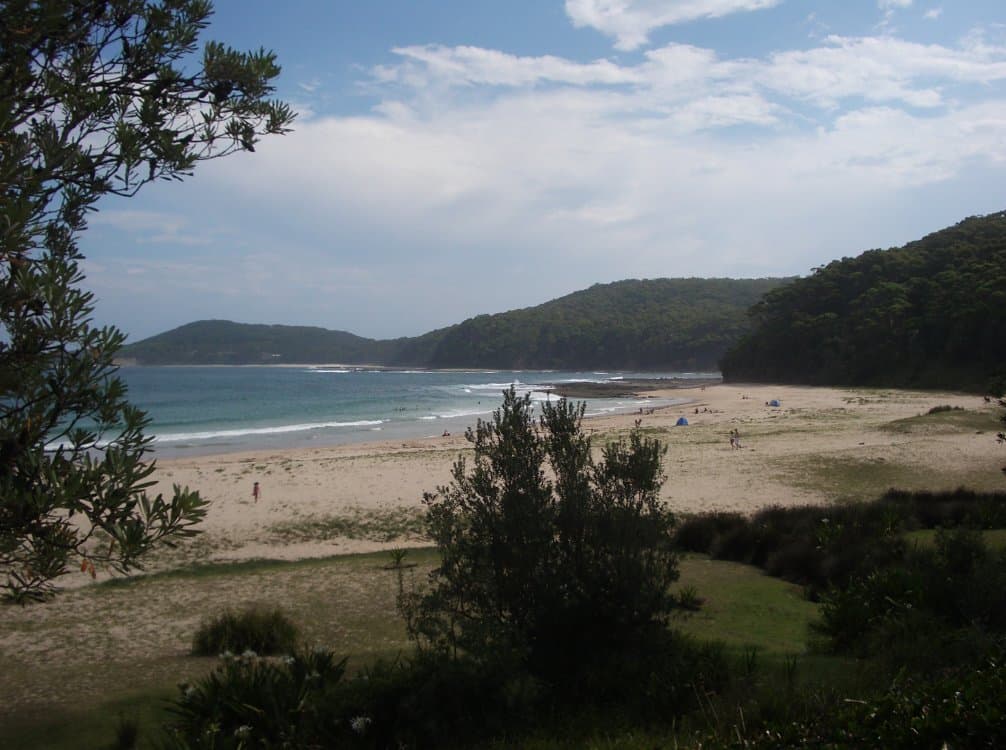
From the white sands of Hyams Beach (Guinness World Record for the whitest sand on Earth) to the dramatic cliffs of Kiama, the South Coast is one of Australia's most beautiful coastal drives.
Stop at charming towns like Berry, Gerroa, and Ulladulla. Dolphins are commonly spotted from shore, and whales migrate past from May to November.
Highlights
Hyams Beach (whitest sand on Earth)
Kiama Blowhole
Dolphin & whale watching
Coastal villages & seafood
Attractions
What to see, how long to spend, and roughly what it costs.
Hyams Beach
Half dayFree
Recorded by Guinness World Records as having the whitest sand in the world — calm bay water, gentle entry, best for swimming. 2hr drive from Sydney.
Kiama Blowhole
1 hrFree
A sea cave that fires spray up to 30m on big swells — best after a southerly. Free viewing platforms 5 minutes from Kiama town centre and the train station.
Berry village & dairy stops
2–3 hrsFree to walk; tastings $5–$10 AUD
Pretty inland village south of Kiama with a bakery main street and the South Coast dairy-farm cluster — try the local cheese and the fig-and-vinegar people pick up every trip.
How to get there
By train (the default): The South Coast Line (SCO) leaves Central and runs through Sutherland, Waterfall and Helensburgh before dropping down the escarpment to the coast, with electric trains as far as Kiama.
Wollongong is about 87 minutes from Central on an express and Kiama roughly 2h15–2h30. Trains run about twice an hour in the peaks and roughly hourly off-peak.
It is all Opal or contactless — no paper tickets and nothing to book.
The Kiama change is the one thing to get right: Kiama is where the electric network ends. Everything south of it — Gerringong, Berry, and Bomaderry, the station for Nowra — is the diesel branch, and it runs only about every two hours, so you get off at Kiama and wait.
Some indicator boards show trains terminating at Kiama for that reason. Bomaderry sits on the north bank of the Shoalhaven River, a short walk or bus ride from Nowra town centre.
Central to Bomaderry is about three to three and a half hours.
The line runs inland, and that matters: Between Wollongong and Kiama the railway sits back from the coast, and the coastal towns it actually serves are Thirroul, Bulli, Woonona, Corrimal, Fairy Meadow, North Wollongong and Wollongong.
South of Kiama it reaches Gerringong, Berry and Bomaderry, and stops there. There is no train into Jervis Bay, Huskisson or Hyams Beach — the last stretch is road only, by bus, taxi or car from Bomaderry or Nowra.
Long-distance coaches also run from Sydney to Nowra, Ulladulla and Batemans Bay for anyone going further south.
Opal fares and the daily cap: The fare is distance-banded and capped rather than a flat regional fare. The adult Opal daily cap is $19.30 Monday to Thursday and $9.65 on Friday, Saturday, Sunday and public holidays, with a $50 weekly cap (adult fares rose on 14 July 2025, so treat these as the 2025–26 figures).
Kiama sits in the top distance band, so a weekday return runs into the $19.30 cap, while a Friday-to-Sunday or public-holiday trip is capped at $9.65 however far you go.
Tap on and off with an Opal card or any contactless card or phone.
By car: The M1 runs south through the Royal National Park to the Illawarra and drops down Mount Ousley into Wollongong, where it becomes the Princes Highway for Dapto, Albion Park, Kiama, Berry and Nowra.
From the CBD, allow about 1h30 to Wollongong, two hours to Kiama and 2h30–3 hours to Jervis Bay. The Sea Cliff Bridge and the Grand Pacific Drive are on the old coast road (Lawrence Hargrave Drive) rather than the highway, and are worth the detour.
What the traffic really does: A summer Sunday is the worst of it. The southbound run on a Friday afternoon and the northbound return on a Sunday afternoon and evening — Mount Ousley Road, then the M1 through Heathcote and Waterfall — are the two chokepoints, and long weekends are worse again.
Go down early and aim to be heading back north before mid-afternoon, or take the train and skip the crawl entirely.
Parking: Kiama's Blowhole Point and Surf Beach car parks fill by mid-morning on a summer weekend; there is usually more room around Kiama station. At Jervis Bay the Hyams Beach car park is small and full well before lunch in January — many visitors park at Vincentia or Huskisson and walk the White Sands Walk between the beaches instead. Booderee National Park charges a vehicle entry fee.
Best time to visit
Spring (Sep–Nov): The locals' favourite. Wildflowers on the headlands, mild 15–24°C days, and the return whale migration running close to shore with calves. The water is still a step too cold for long swims, but the beaches are quiet and the light is at its best.
Summer (Dec–Feb): The only time most visitors swim comfortably, with air in the mid-twenties and water around 21–23°C. It is also the busiest: school holidays from mid-December to late January fill the holiday parks, the Kiama Blowhole car parks and Jervis Bay, and accommodation prices peak. Book months ahead, and start early in the day.
Autumn (Mar–May): The quiet sweet spot. The weather is settled and still warm enough to swim in March and April, the crowds thin out once the school holidays end, and the May whale migration begins. Easter is the one crowded window.
Winter (Jun–Aug): Cool 12–18°C days, cheap accommodation and empty beaches — plus the peak of the humpback season, when thousands of whales pass on the northward run and the headlands at Kiama, Gerringong and Bass Point are the place to watch them.
Swimming needs a wetsuit, but this is when the coast belongs to the people who live on it.
The real variables are the southerly, the swell and the crowds: Coastal weather here turns on the wind more than the season — a southerly buster empties the beaches within an hour, and a big swell closes the rock platforms and sends the blowhole higher.
Check the wind, the swell and the school-holiday calendar the morning you travel; if you can only pick one window and cannot move it, aim for late February to April or October, midweek.
Top things to do
1. See the Kiama Blowhole and walk the Kiama Coast Walk
The blowhole fires spray up to 30m on a big southerly swell, and the viewing platforms are a five-minute walk from Kiama station. Then take the Kiama Coast Walk — about 22km of clifftop track towards Gerringong, split into three sections, so you can walk the Gerringong end and still catch the train back.
2. Drive the Sea Cliff Bridge and the Grand Pacific Drive
The old coast road between Coalcliff and Clifton was rebuilt after landslides as a bridge cantilevered out over the sea, and it is the most photographed stretch of road in the state.
Walk or cycle the path on its ocean side, and stop at Bald Hill above Stanwell Tops for the hang gliders and the view back to Sydney.
3. Swim at Hyams Beach and walk the White Sands Walk
Hyams Beach is the white-sand photograph — fine, squeaky and startling against the blue of Jervis Bay. The car park is tiny, so park at Vincentia or Huskisson and walk the White Sands Walk between the beaches instead, which is a better day anyway.
4. Explore Booderee National Park
A Commonwealth-run park on the southern side of Jervis Bay: Murrays Beach, the Cape St George lighthouse ruins and the botanic gardens with its Aboriginal cultural walk.
There is a vehicle entry fee, and the beaches here are quieter than the Hyams Beach end.
5. Take a dolphin or whale cruise from Huskisson
Jervis Bay has a resident dolphin population that is seen on almost every trip, and from May to November the same boats run whale-watching cruises out past Point Perpendicular. Book a morning departure for the flattest water.
6. Eat and browse in Berry and Gerringong
Berry is the inland village with the bakery-and-antique main street and the South Coast dairy farms behind it; Gerringong is the one with the boat harbour, Werri Beach and the headland walk between them.
Do both in one afternoon — they are 15 minutes apart on the train.
7. Go inland to Fitzroy Falls and Kangaroo Valley
Half an hour off the highway and a completely different landscape: Fitzroy Falls drops 80m into the Morton National Park gorge, and Kangaroo Valley is the historic village below it, with the Hampden Bridge and canoeing on the river. A good wet-weather alternative when the coast is blowing a gale.
Pro tips
Remember the change at Kiama — the southern branch runs about every two hours
The electric train gets you to Kiama and no further; Gerringong, Berry and Bomaderry (for Nowra) are the diesel branch, roughly every two hours, and there is no train at all into Jervis Bay.
Check the timetable before you go, because the connection at Kiama can turn a two-hour trip into a four-hour one.
Go on a Friday, Saturday or Sunday for the $9.65 fare cap
Adult Opal travel is capped at $19.30 Monday to Thursday but only $9.65 from Friday to Sunday and on public holidays (2025–26 fares). Kiama is in the top distance band, so a weekend or Friday return costs about half a weekday one — the same trick that works for the Blue Mountains.
Drive south early and come back before mid-afternoon
The Princes Highway and Mount Ousley Road northbound on a summer Sunday afternoon is the worst drive on this coast, and long weekends are worse again.
Leave Sydney early, do the beaches in the morning and start back before 3pm — or take the train and skip it.
Book Jervis Bay parking and cruises before you go
Hyams Beach has a tiny car park that fills before lunch in January; park at Vincentia or Huskisson and walk the White Sands Walk instead. Dolphin and whale cruises out of Huskisson sell out in school holidays, so book a morning departure ahead. Booderee National Park also charges a vehicle entry fee.
Plan your trip
How many days do I need in South Coast?
3–5 days for the full coastal drive
When is the best time to visit South Coast?
Oct–Apr for swimming; May–Nov for whales
How do I get to South Coast from Sydney?
Drive south from Sydney on the Princes Highway (2–3hrs). Train to Kiama available.
Getting there
Drive south from Sydney on the Princes Highway (2–3hrs). Train to Kiama available.
Best time to visit
Oct–Apr for swimming; May–Nov for whales
Suggested stay
3–5 days for the full coastal drive
More places to explore
Keep reading
Related guides
Plan your Sydney trip
South Coast is worth 3+ days — a longer stay lets you catch the second-day-favourite spots that day-trippers miss.
Read guide →Getting around
Opal cards, train timetables, and car-hire tips for regional trips.
Read guide →Budget for the trip
Daily costs for couples, solo travellers, and families across NSW.
Read guide →