Loading...
关于这个地方
最后更新:15/10/2026
The Bondi to Coogee Coastal Walk is the best free thing to do in Sydney and the one day out that needs no car at all.
Six kilometres of cliff-top path link seven beaches along the eastern edge of the city: Bondi, Tamarama, Bronte, Clovelly, Coogee and the small bays between them.
There are ocean pools built into the rocks, a convict-era cemetery hanging over the sea, 2,000-year-old Aboriginal rock engravings at Marks Park, and from the headlands you may see humpback whales.
Buses run to both ends, so you walk it one way and ride back.
Allow two to three hours of walking, or a full day if you stop to swim.
亮点
The cliff-top path from Bondi Icebergs to Coogee
Bondi Icebergs and the ocean pools at Bronte and Coogee
Waverley Cemetery, on the cliffs above the sea
Whales from the headlands in the June to August migration
景点
看什么、待多久,以及大致的花费。
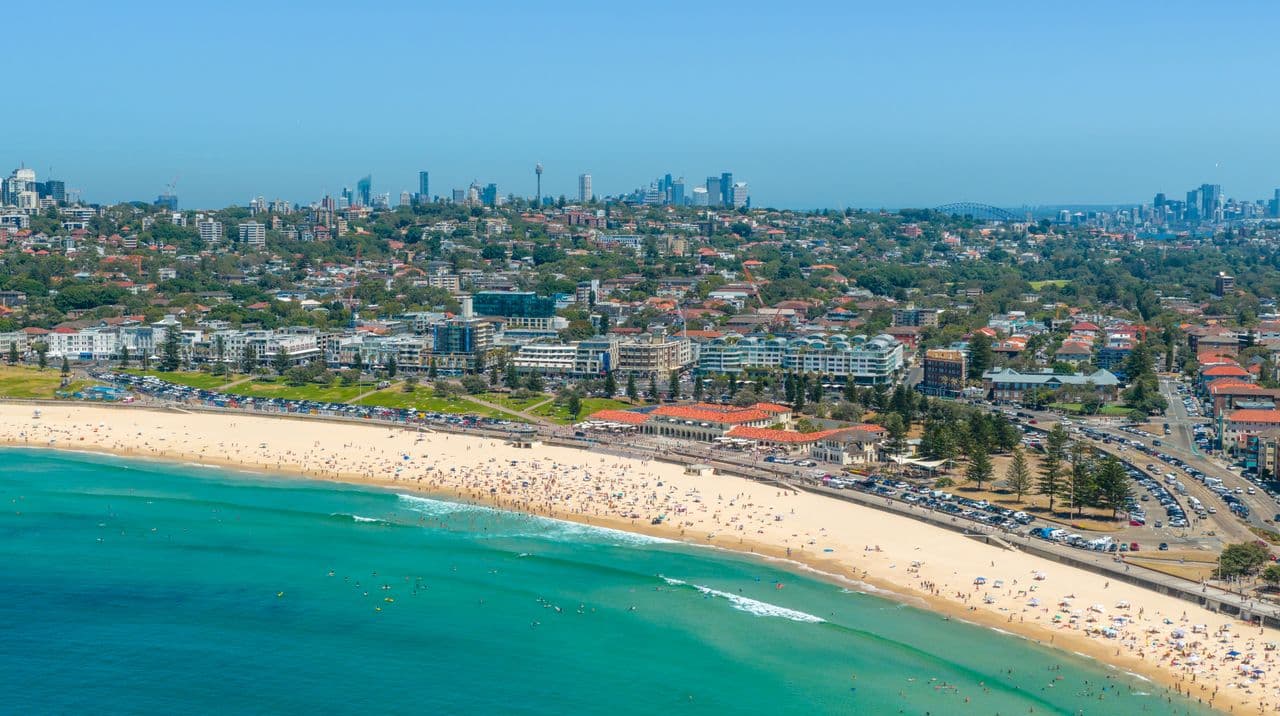
Bondi Icebergs and the south end of Bondi Beach
20 minutes, plus 1 hour if you swimFree to walk; pool entry charged (check current price at the gate)
The start of the walk. The Bondi Baths at Icebergs are the most photographed ocean pool in the country: a 50-metre lap pool and a smaller children's pool cut into the rocks at the southern end of the beach, with the surf breaking over the wall beside you.
It is a paid, club-run pool and it is for lap swimming rather than lounging.
The walk proper starts on the path above it, signposted from the south end of Campbell Parade, and the first climb up to the Bondi clifftop is the steepest section of the whole route.
Look back once you are up: the view over the beach is the postcard.
Tamarama
10 to 15 minutesFree
A deep, short beach in the next bay south, reached by a boardwalk and stairs that drop steeply between the headlands.
Tamarama is the smallest of the beaches on the walk and the one with the strongest surf - it is nicknamed Glamarama for the crowd that comes to be seen rather than to swim, and it is not the beach for an inexperienced swimmer.
The surf club sits at the back of the sand, and there is a cafe above the beach for the first coffee stop of the day.
Marks Park and the Aboriginal rock engravings
20 to 30 minutesFree
The lawn-covered headland between Tamarama and Bronte, and one of the most important cultural sites on the walk.
Marks Park holds Aboriginal rock engravings, including a large whale, cut into the sandstone around 2,000 years ago.
This is a living cultural site for the local Aboriginal community and not a curiosity: do not walk on, touch or chalk the engravings, keep to the paths, and treat the site quietly.
The headland is also the best whale-watching point on the walk, and the setting for the Sculpture by the Sea exhibition each October.
Bronte Beach and the Bogey Hole
30 to 45 minutesFree
Bronte is the family beach of the walk: a wide crescent with a big grassy park behind it, free electric barbecues, a cafe strip on the north side and a patrolled swimming area.
At the southern end is Bronte Baths, a free ocean pool cut into the rocks in 1887 with a rock shelf beside it that children snorkel on.
Just beyond it is the Bogey Hole, a natural rock pool that fills at high tide and is the local spot for a cold dip and a photograph.
The walk climbs out of Bronte on steps from the southern end of the beach.
Waverley Cemetery
20 minutesFree
Between Bronte and Clovelly the path runs along the seaward edge of Waverley Cemetery, which opened in 1877 and is built on the cliffs directly above the water.
It is a working cemetery, not an attraction: keep to the coastal path, keep voices down, and respect the visitors and the graves.
The Victorian monuments right at the cliff edge, with the Pacific behind them, are unlike anything else on the walk, and this stretch is where the path is most exposed - it is the part that closes first in a big sea.
Clovelly
30 to 45 minutesFree
A long, narrow inlet rather than a surf beach, with concrete platforms on both sides and no waves to speak of - the calmest and safest swimming on the whole walk, and the one locals bring small children to.
The water is deep and clear, with a blue groper that everyone knows, and an underwater nature trail.
The Clovelly Ocean Baths at the northern end are free, and there is a kiosk and a bowling club for lunch.
The hill out of Clovelly towards Gordons Bay is the last real climb.
Gordons Bay
15 to 20 minutesFree
A small, sheltered bay tucked below the road between Clovelly and Coogee, with a pebbly beach, a rocky south head and the Gordons Bay Underwater Nature Trail marked out from the shore.
It is one of the best snorkelling spots in Sydney - the shelter keeps the water flat when the ocean beaches are rough - and it is easy to walk past without noticing, because the path crosses the top of the bay on the road.
Look for the stairs down on the seaward side.
Coogee Beach, Wylie's Baths and McIvers Baths
1 hour or moreBeach free; pool entry charged at Wylie's, McIvers free
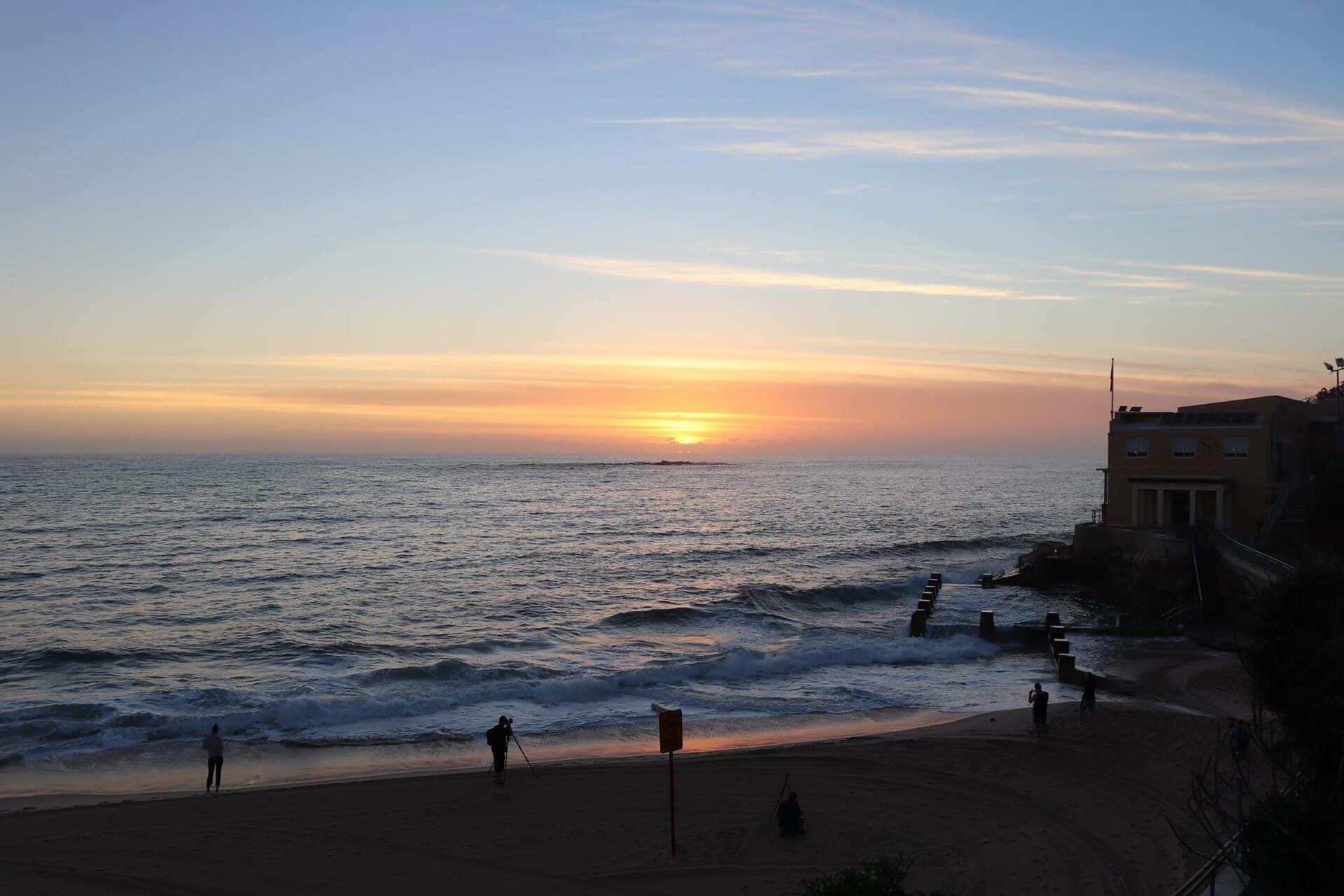
The end of the walk. Coogee is a full beach suburb: a sheltered, patrolled beach, the Coogee Pavilion and its rooftop at the northern end, and cafes and pubs along Coogee Bay Road.
Two historic ocean pools sit at the southern end.
Wylie's Baths, built in 1907 and perched on the rocks below the cliff, is a paid tidal pool with wooden decks, deck chairs and a heritage listing - lap swimming and gentle dipping rather than laps, and one of the loveliest places to end the day.
Further south, McIvers Baths is a free ladies-only pool that has been set aside for women and children since 1876.
Buses back to Bondi Junction and the city leave from Coogee Bay Road.
如何到达
Bondi Beach is the bus end, and the bus is the 333. The 333 runs from Circular Quay in the city through Bondi Junction to Bondi Beach and North Bondi, all day and late into the evening, and it is the route to use from the CBD - roughly every 10 minutes in the peak and every 15 to 20 off-peak.
From Bondi Junction, buses 380 (to Bondi Beach and on to Watsons Bay) and 379 both reach the beach, and the 381 covers the Tamarama and Bronte side of the route.
All of them stop on Campbell Parade, a two-minute walk from the start of the coastal path at the south end of the beach.
Coogee is the other end, and it has its own routes. Bus 313 connects Coogee Beach to Bondi Junction through Randwick, and bus 373 runs from Coogee Beach to the city via Randwick and the City Museum.
Bus 370 also serves Coogee Beach. Whichever way you do the walk, the bus stop you want at the Coogee end is on Coogee Bay Road, a couple of minutes from the beach and from Wylie's Baths.
Route numbers on this corridor have changed more than once in the last decade, so check the current timetable for your date on the Transport for NSW trip planner rather than trusting a printed guide.
Fares, and what the day costs. Sydney buses are priced by distance band, not by route, and you tap on with an Opal card or any contactless card or phone - there are no paper tickets and nothing to book.
Buses get no off-peak discount, so the fare is the same at 7am and at 2pm.
What matters is the cap: on the 2025-26 Opal scale the adult daily cap was $19.30 Monday to Thursday and $9.65 from Friday to Sunday and on public holidays, with a $50 weekly cap, and every bus you take that day counts inside it.
Fares and caps are revised each July and we could not verify the current numbers, so treat those as the scale rather than a quote and check transportnsw.info before you travel.
Two bus rides - one to Bondi, one home from Coogee - sit inside the weekend cap.
The walk is one way. There is no loop and no shortcut back: you either walk it in reverse from Coogee to Bondi, or you finish at Coogee and take the bus home.
Buses run from both ends until late, so a late start is possible, but the light on the cliffs is best in the morning.
If you would rather not commit to the whole six kilometres, the Bondi to Bronte section is the busiest and the most spectacular, and buses run from Bronte back to Bondi Junction.
By car, if you must. Parking at Bondi Beach and Coogee is paid, metered and full by mid-morning at the weekend, and a one-way walk leaves you with the car at the wrong end.
Leave it at Bondi Junction station instead - there is a paid multi-storey there - and use the buses at both ends.
最佳游览时间
Summer (December to February): The walk at its busiest and its hottest.
Start by 7am if you can: the cliff path has almost no shade, the UV is extreme by mid-morning, and the ocean pools are the reward at the end of each section.
Bronte and Clovelly are the easiest swims; Tamarama and Bondi are surf beaches with rips, so swim between the flags.
December and January are school holidays, so the cafes at Bronte and Coogee are packed and the buses are standing-room.
Autumn (March to May): The best all-round walking weather - warm but not punishing, and the light is clean.
The water stays warm into April. This is also the tail of the whale season, so humpbacks are still being seen from the headlands into May, and there are far fewer people on the path than in summer.
March is the most reliable month of the four.
Winter (June to August): Cool, clear and the quietest season, and the season to come for the whales: humpbacks migrate north past the cliffs through June and July and the headlands between Bondi and Coogee, especially Marks Park, are among the best land-based viewing points in Sydney.
Bring a windproof layer - the cliffs are exposed and the wind is cold - and expect some path closures after heavy seas.
The Bondi Icebergs winter swimming club swims straight through it, and the pools are at their emptiest.
Spring (September to November): Mild, green and windy.
The whales are heading back south from September, wildflowers are out along the cliffs, and September and October are the windiest months of the year in Sydney.
Late October brings Sculpture by the Sea, the free outdoor sculpture exhibition that fills the cliffs between Bondi and Tamarama for about three weeks - it is the busiest and best time to walk this path, and the worst time to expect a quiet photograph.
What the sea does to the plan. The path is cut into soft sandstone and closes after storms and big swells; sections are sometimes shut for months for repair.
Check the Waverley Council or Randwick City Council page for the walk before setting out after bad weather, and take the signed detours rather than the cliff edge.
必做之事
1. Walk the six kilometres from Bondi Icebergs to Coogee
The main event: a Grade 2 cliff-top path, about 6km one way, two to three hours at an easy pace with the stops included.
It is a genuine walk with stairs and climbs - not a promenade - so wear shoes, and it is not suitable for prams or wheelchairs because of the steps and the narrow sections.
2. Swim in an ocean pool cut into the rocks
Three pools on the route are worth planning around.
Bondi Icebergs at the start is a paid 50-metre lap pool with a children's pool beside it.
Bronte Baths at the middle of the walk is free and cut straight into the rock shelf.
At the Coogee end, Wylie's Baths is a paid 1907 tidal pool on the cliff below the road, and McIvers Baths, a little further south, is free and has been reserved for women and children since 1876.
3. See the Aboriginal rock engravings at Marks Park
On the headland between Tamarama and Bronte, engravings including a large whale were cut into the sandstone about 2,000 years ago.
They are a living cultural site for the local Aboriginal community: view them from the path, do not stand on them or touch them, and do not chalk or photograph them with a flash.
4. Watch humpback whales from the cliffs in winter
From June to August humpbacks migrate north along the coast, and the headlands at Marks Park, Bronte and Clovelly are among the best places in Sydney to see them from land - no boat, no ticket.
Bring binoculars if you have them, watch for the blow, and give it ten minutes of stillness.
5. Walk it during Sculpture by the Sea in late October
The free outdoor sculpture exhibition takes over the cliffs between Bondi and Tamarama for about three weeks each spring, with the path turned into a sculpture park over 2km.
Go early in the day or on a weekday; the path carries hundreds of thousands of visitors across the exhibition and the buses fill up with them.
6. Eat and drink your way along the route
There are cafes at every beach: above Tamarama, in Bronte Park, at the Clovelly kiosk and bowling club, and a whole strip along Coogee Bay Road at the end.
The Coogee Pavilion at the northern end of the beach has a rooftop bar for sunset, and the fish and chips at Coogee and Bondi are a Sydney tradition in their own right.
7. Snorkel at Gordons Bay and Clovelly
The two calmest, clearest spots on the walk, both with marked underwater nature trails and both sheltered from the ocean swell.
Gordons Bay is the better of the two for fish; Clovelly is the better one for beginners and children.
Bring your own mask and snorkel, or hire gear at Bondi or Coogee before you start.
内行贴士
Walk it Bondi to Coogee, not the other way round
The sun is behind you for the morning and you finish at Coogee, which has the better concentration of cafes, pubs and buses home.
It also puts the steepest climb - up from Bondi Beach to the clifftop - at the start, while your legs are fresh, rather than at the end of a hot afternoon.
Carry water and start early - there is almost no shade
The path is exposed sandstone cliff for most of its length, with drinking fountains only at the beaches.
Two litres per person on a summer day, a hat and sunscreen, and start before 9am if the forecast is over 28 degrees.
There is no water and no toilet between Bronte and Clovelly.
Check for closures after storms before you set out
The track is cut into soft sandstone and shuts after heavy rain or big swells, sometimes for months.
The councils publish the current closures and the signed detours, and the detours are the safe route - the cliff edge past a closure is not.
Take the bus on the weekend and the Opal cap pays for the day
On the 2025-26 Opal scale the adult daily cap was $9.65 from Friday to Sunday and on public holidays against $19.30 Monday to Thursday, and both bus rides count inside it.
Fares are revised each July - check transportnsw.info for the current cap before you plan the day around a weekend.
规划你的行程
在Bondi to Coogee Coastal Walk需要玩几天?
Half a day for the walk at pace; a full day with swims at Bronte, Clovelly and Coogee
什么时候去Bondi to Coogee Coastal Walk最好?
Year-round; early morning for the light and the crowds. June to August for whales from the cliffs, and late October for Sculpture by the Sea
从悉尼怎么去Bondi to Coogee Coastal Walk?
Bus 333 from Circular Quay to Bondi Beach, or bus 380 from Bondi Junction. At the Coogee end, buses 313 and 373 connect Coogee Beach to Bondi Junction and the city. Opal card or contactless card; the walk is one way, so one end is a bus ride home.
如何前往
Bus 333 from Circular Quay to Bondi Beach, or bus 380 from Bondi Junction. At the Coogee end, buses 313 and 373 connect Coogee Beach to Bondi Junction and the city. Opal card or contactless card; the walk is one way, so one end is a bus ride home.
最佳游览时间
Year-round; early morning for the light and the crowds. June to August for whales from the cliffs, and late October for Sculpture by the Sea
建议停留时间
Half a day for the walk at pace; a full day with swims at Bronte, Clovelly and Coogee